30 Facebook Group Engagement Posts Ideas That Actually Work
Struggling to keep your Facebook group active? Use these 30 proven facebook group engagement posts ideas to spark conversations, grow reach, and retain members.


How active your Facebook group engagement posts are, is what makes your community live or die. Put up the wrong kind of material and people start to leave. Speak no word and they forget you.
The good part is that you don't have to have a large budget or a content team in order to boost engagement in your Facebook groups. It takes the right thoughts, continually posted.
Here are 30 ideas that you can use, from welcome posts to giveaways to behind-the-scenes content. All of these are proven to work.
The Best Facebook Group Engagement Post Ideas
1. Welcome New Members to Facebook Group
A welcome post to new members in a group shows they're in the right place. It makes them feel valued from day one, and valued members engage more.

Go to the Members tab in your group and write a welcome post. All current new members are automatically tagged by Facebook. It makes them feel valued from day one, and valued members engage more.

Ask them where they are from, what they do, or what is the reason for their coming to the group. The responses are strong to simple questions.
2. Facebook Group Live Videos
Facebook Group Live video creates real-time reactions and comments. One of the highest engagement indicators that Facebook favors. Utilize them for questions and answers, product launches, tutorials, or community gatherings.
Not sure how to go live in a Facebook group? Click on Write Something from within your group.

Now click on the “three-dot” menu. You will see a window that has several choices, click on “Live Video.”

You can go live, or schedule a live session. Please include a description and title to indicate what will be discussed.
3. Use the Power of Storytelling
Story is the tool to develop emotional connection. Share an experience, a challenge you've overcome, a win a member has obtained or a behind-the-scenes moment in your business. Be specific and sincere.

It also makes it possible to make posts in the Facebook group that will encourage members to post their story too. These types of questions always generate a rich flow of comments: 'Tell us how you got started' or 'Share the moment everything changed'.
4. Run Contests and Interactive Polls
Polling is one of the quickest methods for getting engagement. Members can reply with a single tap, without having to think of anything original to say. It is this low barrier that makes them function.
Nothing is better than having an interest-grabbing poll or a trivia quiz. If a survey on Facebook is put on or a quick quiz is posted, the members can post their own thoughts in an instant, and people begin communicating rather quickly.
To find out what is popular in your niche, create a poll, and then you can make content based on that. Hold a contest in conjunction to encourage participation and maintain the momentum.
5. Post a Highly Sharable Quote Image
Quote Images work because they are shareable, scannable and emotionally resonant. Choose a quote that embodies your group's values or niche. Ensure the image is clear and text legible on mobile.
Consider your audience before posting. A quote that inspires a chef could be unappreciated by an entrepreneur. Use a tone appropriate for the community.
6. Post during Peak Engagement Hours
Timing matters. The optimal days and times for posting on Facebook groups to get the most responses are: Tuesday-Thursday from 9 AM until 2 PM. The other mornings of the week (Monday and Friday) are also good.
However, the time that your group may find optimal is not necessarily the same. Look at the Facebook group insights to determine your members' peak activity times. Don't base your own data on general benchmarks.
7. Ask Direct Questions
Questions are an immediate call to action. They give members directions precisely about what you desire them to accomplish: reply. Be concise, and give specific questions.
Image-based questions are very effective, and can be used in conjunction with a photo and question to provide visual context for members' answers. The use of ‘which’ with no visual cue beats open-ended questions with no visual cue every time.
8. Use the Edu-tainment Posting Strategy
Facebook loves content that is both educational and fun. If you teach a member something useful in a fun and easy-to-read post, it will have more reactions, more shares and more reach.

Post maximum 1-2 times daily. Quality over quantity each time, one useful post will beat out five forgettable ones. The algorithm is aware of the difference.
9. Like, Comment, and Respond to Other Members' Posts
A relationship is a relationship, and it is reciprocal. Your activity, as group admin or moderator, sets the tone. As members are seen and respond to posts and comments, and acknowledge member contributions, they will respond.
Regularly spend 10-15 minutes per day responding to what people your members are posting on social media. This alone can raise the level of group activity significantly.
10. Repost your Best-performing Content
Your top posts are still important. Anyone who joined the membership after a post was made never viewed it. Reposting means that content is given a second life, with sometimes even better reach.

Avoid copying and pasting! Just slightly change up the format: make a text post into a question, add a new image, or invite members to share their thoughts on how it's changed since the original post.
11. Host Offline or Virtual events
Events are the best way to bring together members that no post can replace. Events, be it in-person, virtual, or a group Zoom call, help to strengthen the bond and build a story that's shared among members both inside and outside the group.
Let members know about events beforehand, and remind them 24 hours beforehand, then follow up with a post after the event. Often, the follow up post will attract more attention than the announcement of the event.
12. Send Emails to Facebook Group Members
One of the most helpful methods to get inactive members back into your group is by email. An email nudge, a share of a trending topic or event or an exclusive deal, gets people to return who have lost their habit of checking Facebook on a regular basis.
To do this you need your members' email addresses. They can be easily gathered at membership enquiries at the point of membership. Groupboss does this too: All answers, even email addresses, are automatically saved to a Google Sheet when you approve a member. If you are interested in setting up the entire walkthrough for collecting emails from the Facebook group, then we’ve got some detailed instructions.
13. Opinion Posts
Ask your group a question on a subject other than your business, something industry related or personal. What is the one tool you couldn't live without or what is the most impactful book that you read this year?
These questions are very simple to answer and members will share something about themselves to foster connection.
14. Giveaway Posts
It's a no-brainer that giveaways can boost engagement. They keep members engaged in your group, bring new members on board, and make your group exciting. Make entry requirements as simple as possible, a comment, a tag or an answer to a question. The lower, the more people participate.
Make the prize applicable to your niche. A $50 Amazon voucher is something that everyone is interested in. Your real ideal members are attracted to a relevant product/service.
15. Discount and Exclusive Offer Posts
Group-exclusive discounts give members a sense of being part of an exclusive club. It's a sense of exclusivity, which drives loyalty and provides a clear incentive to remain engaged in the group.
The best way is time-limited offers. This certainly drives urgency which an open-ended offer doesn't. Limit use for maximum impact.
16. Rule-driven Content Clarification
Group rules help to minimize confusion and improve post quality. The more confident members post when they know exactly what they can and can't post.
The better the posts, the greater the discussion, and the more the discussion engages the group.
17. Monitor and Reduce Spam Actively
Spam kills engagement. If they see posts that are not relevant or of poor quality in the feed, they cease to "check in". Facebook's inbuilt spam detection is a good thing, but not foolproof. Check the posts you have in view every day and delete any that are not useful.
18. Track your Post Reach Metrics
Without data, there's no engagement strategy. Weekly review each week the group insights to see which posts received the most comments, reactions and shares. Do more of the things that are working. Drop what doesn't. This habit alone will make a difference in the performance of your group over more than 30 days.
19. Content Calendar Consistency
Frequency is not the most important thing, consistency is. Frequent posts 3 per week consistently outperform infrequent posts 10 on one week, 0 on the next. Members come into the rhythm and are there when they are needed for content.

Create a basic content calendar (even just a spreadsheet post topics/date). When you plan a week in advance, you will not have to worry about the day-to-day pressure on your group and will keep them active even during busy periods.
20. Dedicated Member Spotlights
Feature a member in the story, the achievement or the contribution to the group once a week. The tags will go directly in the post. This will make the featured member feel truly appreciated and will let others know that their involvement is recognized.
Member spotlights also help members get to know one another which starts new conversations and connections in the group.
21. Structured Themed days
Themed days provide your group with a predictable rhythm that it can rely on. The themes for ‘Motivation Monday’, ‘Win Wednesday' or ‘Feedback Friday' will be ones that resonate with your niche and remain consistent.
Members begin to contribute to themed days without solicitation after 2-3 weeks. The objective is a self-sustaining engagement practice that does not need to build everything from scratch.
22. Expert Q&A Sessions
Bring in someone your members know and trust or want to know and ask questions. Give advance warning (5-7 days) to members to prepare.
Expert Q&As are useful, difficult to duplicate elsewhere, and provide a good motivation to become active in a limited time period for the members. They also recruit members when promoted away from the group.
23. Timely and Relevant Update Posts
If you have something big to post in your niche, do it first in your group. When something happens abruptly, members need to be notified, and when the platform changes, updates, and when the industry changes, members come back to groups to be updated.
Include your opinion, not just a link! A news sharing becomes a discussion starter when the result of the sharing is summarized by ‘Here’s what this means for us.’
24. Behind-the-Scenes Content
Your “behind the scenes” posts humanise your brand and your group. Produce a workspace, process, work in progress or moment from a day in the life. Polished promo content is always outperformed in the group context by authenticity.
25. Feedback and Suggestion Posts
Ask members about what they wish to see more of. What will we be discussing next month? OR What is one thing you would change about this group? When members are called on for input, they feel a sense of ownership of the community and owners engage more.
Address the comments in a public way. Inform members of the changes they suggest, based on their suggestions. If you demonstrate that feedback results in action, more of the former will result in more of the latter.
26. Group Scavenger Hunts
Set up a multi-step challenge that requires members to search the group or the Internet for certain posts, answers or pictures to share with the group. This interactive format can help keep members engaged over multiple days and help them explore past material.
27. Mystery post series
Create anticipation by publishing a series of posts that expose something, a mystery, or a story that takes several days to unfold. Every installment provides a motivation to come back. TV series and community content, they both work with a cliffhanger.
28. Ask Me Anything (AMA) with a Twist
Normal AMAs are effective. Adding a twist makes them memorable, though. Do an anonymous AMA, let an expert answer as a character, or have a ‘reverse AMA’ in which the members ask questions of the expert.
The surprise format creates interest and discussion that does not occur naturally by itself during the Q&A.
29. Collaborative Challenges
a 5-7 day group engagement challenge. Create a daily challenge, invite everyone to report their findings in the comments and reward everyone to participate in public. Challenges work because the member(s) are doing something together, not simply reading content.
For instance, a 5-day productivity challenge, a 7-day posting streak, or a weekly photo challenge on any relevant topic to your niche. Maintain low entry level, high social reward, not prizes.
30. Pinned Resource Posts
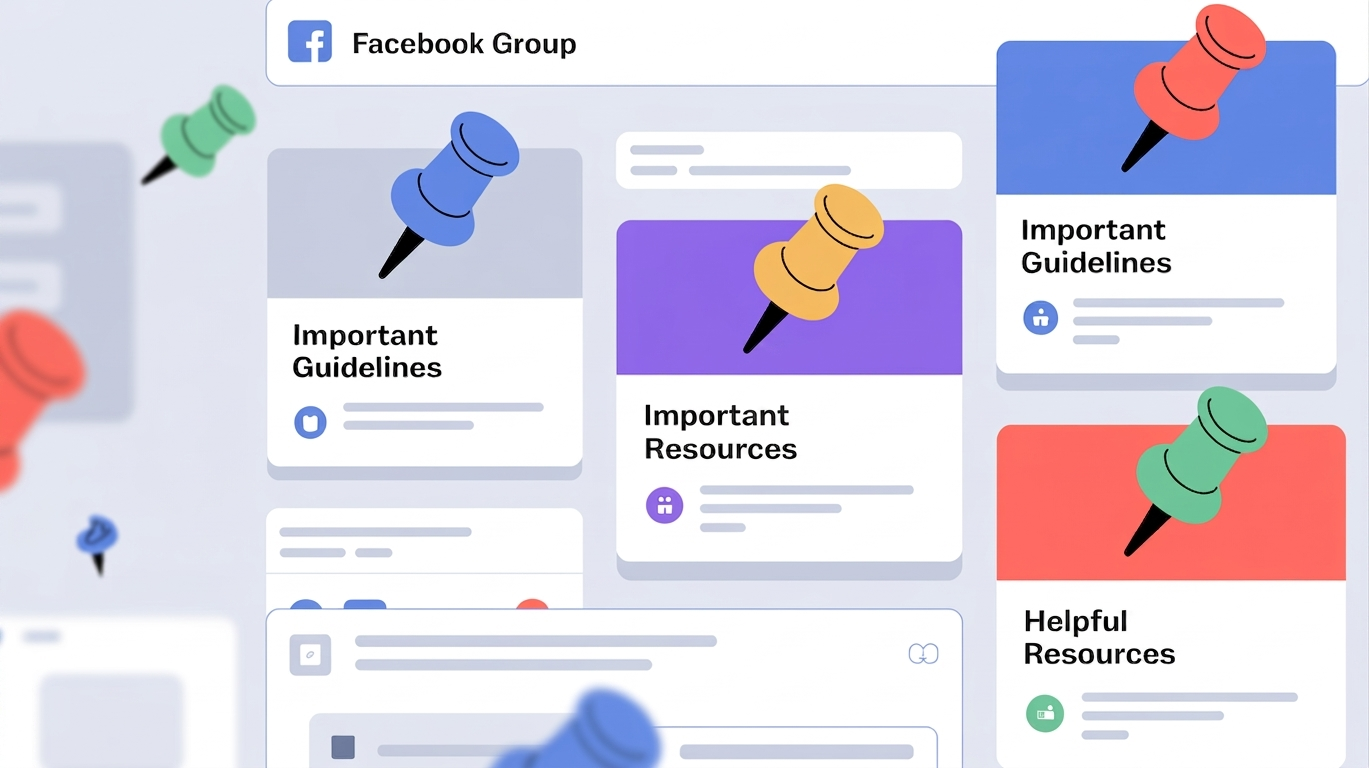
Post a high-value resource at the top of your group, guide, tool list, FAQ or a stickied thread of best of the group content. Pinned posts are visible to all new members joining and will provide a point of reference for members to regularly return. This is a passive engagement method, which doesn't require much constant effort after the post is published.
Start Growing Your Facebook Group Engagement Today
You don't need all 30 of these Facebook group engagement posts ideas at once. Choose three of these that you think will suit your group, and try them out during this week.
See which ones receive the highest number of comments and reactions. Double down those! Expand the variety of formats as the group expands.
Groups with the most engagement interact not for the number of posts, but for the posts that they make and the responses they give in a consistent pattern that makes the member feel that the community is made up of a group of people who value his or her presence.
Frequently Asked Questions
How do I increase engagement in my Facebook group?
The best things you can do to boost engagement on your Facebook group are: post at optimal times, create polls and contests, welcome new members with a personal message, post questions, and reply to each comment the first hour after the post. Begin by establishing 3-5 of these habits, then build up to more.
What should I post in a Facebook group to get more engagement?
Welcome posts, polls, ask a question posts, behind-the-scenes, member spotlight and giveaways are the best Facebook group post ideas. These formats are always more effective than link shares and plain text updates as they encourage a reply rather than just information.
How often should I post in a Facebook group?
Most groups will find 1-2 times a day to be optimal. While posting frequently can be overwhelming, it can also help lower engagement per post. Spending less than once a day posting creates the risk of not being seen in members' feeds. It's not so much the frequency as the consistency, 5 posts a week is better than 20 posts one week, none the next.
What time should I post in my Facebook group?
The best days and times to post to a Facebook group are Tuesdays through Thursdays from 9 AM to 2 PM. There's also high engagement on Mondays and Fridays at the morning time. Look at your own group's Facebook Insights data to find out when your group is most active, this data will always be more accurate than the generic benchmarks.
Why is my Facebook group engagement dropping?
The main reasons for declining group participation are: lack of consistency when posting; poor quality or meaningless posts; not responding to member comments; too many spam posts in the feed; posting when there is little traffic. The two fastest levers to pull are posting frequency and response rate, so you should start there.
How do I get more members to participate in my Facebook group?
Use polls, challenges, and ask direct questions, and highlight active members in public. People join when they see and value their participation. Your first 24 hours of posting will give the most impact by personally replying to each comment, this will tell the Facebook algorithm and other online members that the post is important and needs to be engaged.
Written By
Sami Sadith
Sami is a content writer & loves to read. He enjoys writing about topics such as productivity, viral marketing and growth hacking. Allowing himself to create his unique visual style, but still allowing people to recognize it.